
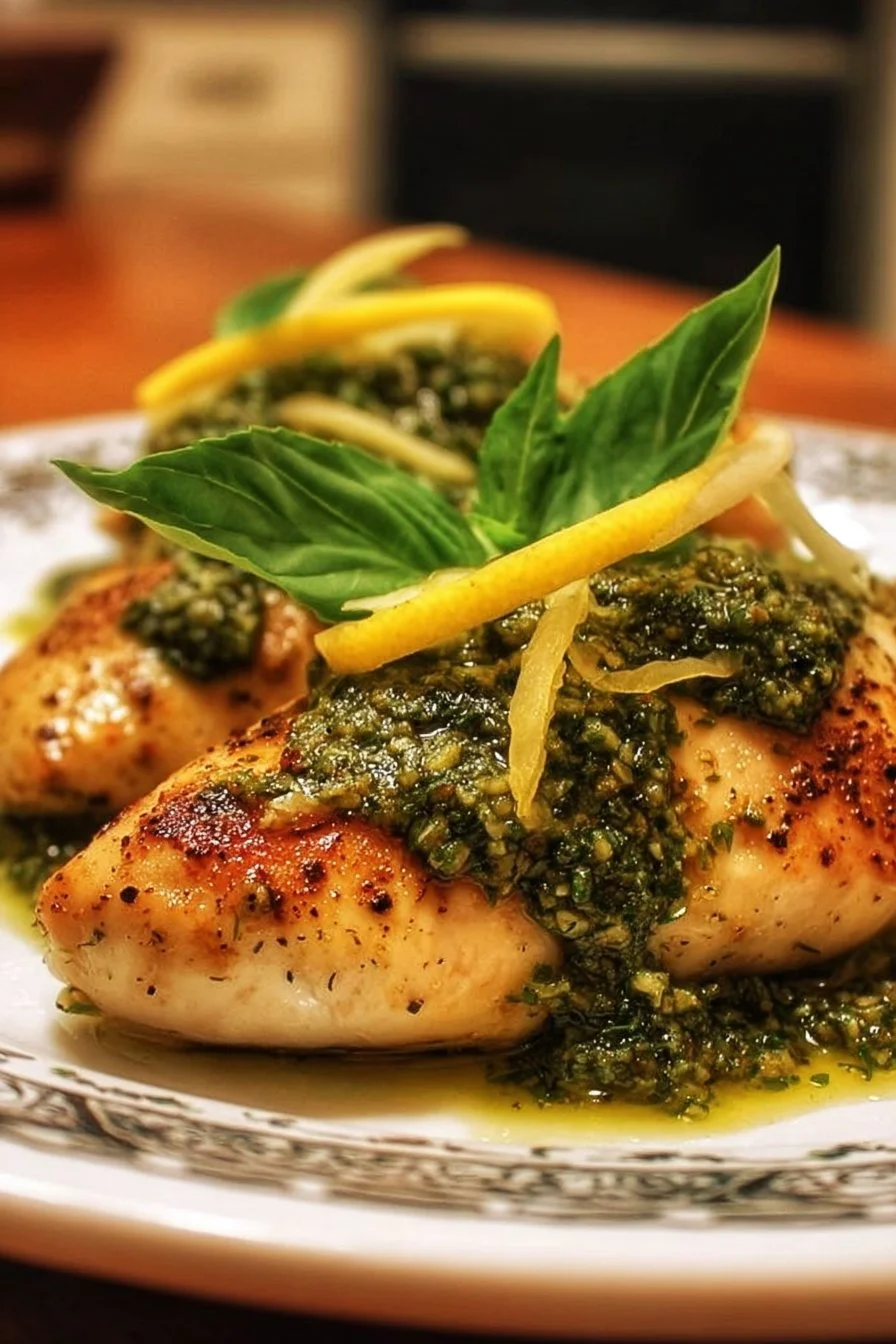
Bright, bright lemon brightens a rich basil pesto in this quick skillet chicken that’s all about fresh flavor and minimal fuss. The pesto brings herbaceous, savory depth while the lemon juice cuts through with tang, creating a glossy sauce that clings to golden, juicy chicken breasts. Texturally you get a crisped exterior and a tender, moist interior — comfort food with a sunny, vibrant twist. It’s an easy 20–30 minute weeknight winner that pairs beautifully with simple pasta or a crisp green salad for a lighter meal. If you’re into saucy chicken dinners, you might also like this creamy pesto chicken pasta for another take on pesto-forward weeknight cooking.
Why You’ll Love This Lemon-Basil Pesto Chicken
- Bright, balanced flavors: herbaceous pesto meets fresh lemon for a lively, not-too-heavy sauce.
- Fast and simple: pantry-friendly steps with just a few ingredients and a single skillet.
- Minimal prep: no complicated marinades or long cook times — season, sear, and saucing.
- Versatile serving options: serve over pasta for comfort or on a bed of greens for a lighter plate.
- Great for leftovers: sauced chicken reheats well and keeps flavor overnight.
- Elegant enough for guests: looks and tastes special without a lot of effort.
- Kid-friendly: familiar flavors that are palatable to picky eaters while still satisfying adults.
What Is Lemon-Basil Pesto Chicken?
Lemon-Basil Pesto Chicken is seared chicken breasts finished in a quick lemon-pesto pan sauce. The technique is straightforward: the chicken is seasoned and cooked in olive oil until golden, then the pesto is warmed with fresh lemon juice in the same skillet and spooned over the chicken. The finished dish tastes bright and herby from the basil, with savory depth from the pesto and a bright citrus lift from the lemon. It’s typically served as a weeknight main — paired with pasta or a salad — but the fresh flavor profile makes it suitable for casual dinner parties and light weekend lunches. The overall vibe is quick, comforting, and slightly elevated without needing special skills or equipment.
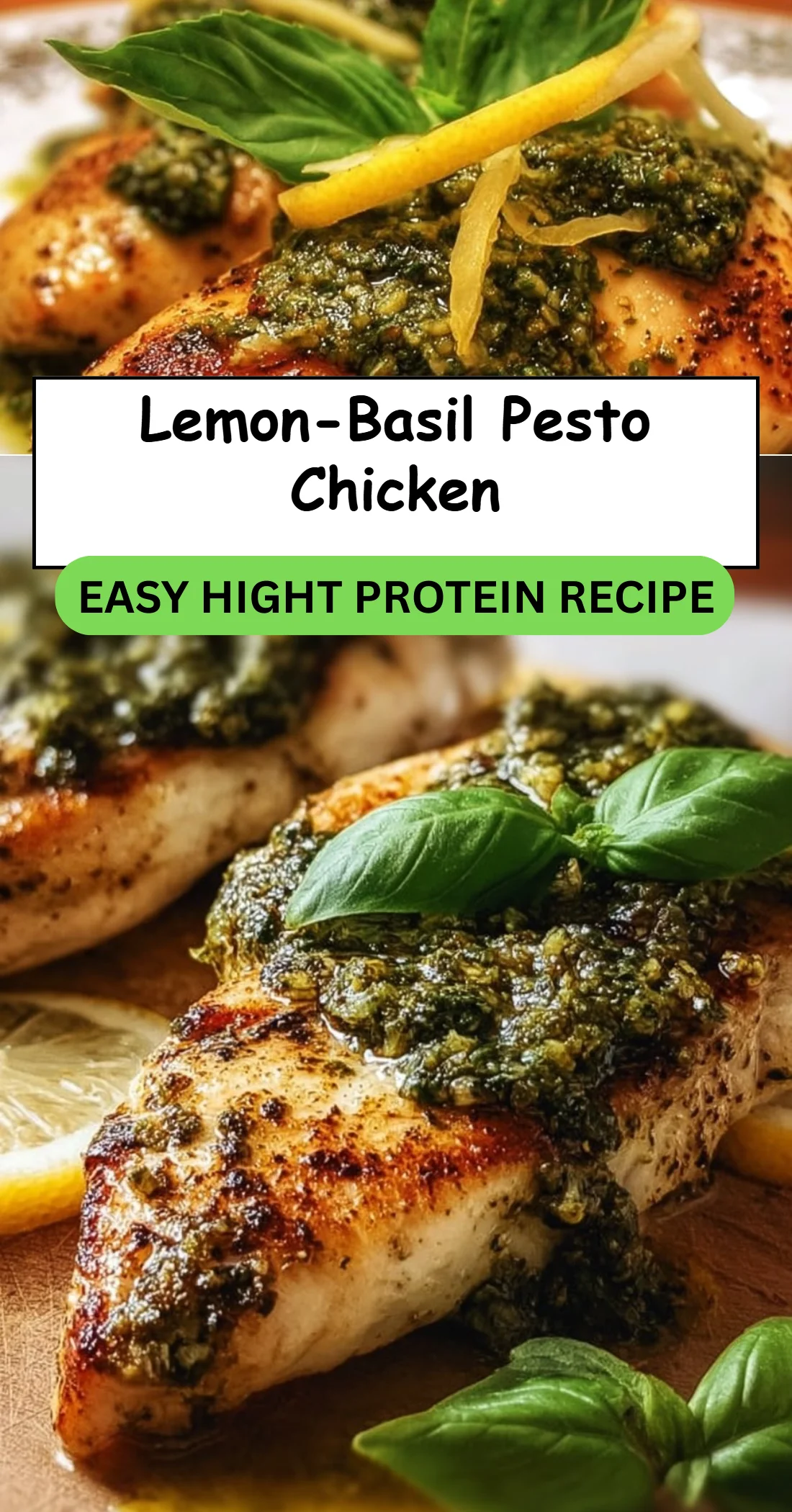
Ingredients for Lemon-Basil Pesto Chicken
For the Chicken
- 2 chicken breasts
- Salt and pepper to taste
- Olive oil (enough to coat the skillet; about 1–2 tablespoons)
For the Sauce
- 1/4 cup basil pesto
- 1 lemon (juiced)
For Serving
- Pasta or fresh salad for serving
Ingredient Notes (Substitutions, Healthy Swaps)
- Chicken: Use skinless, boneless chicken breasts as written. Optional swap: boneless skinless chicken thighs can be used if you prefer darker meat (cook a bit longer until cooked through).
- Pesto: If you need a dairy-free option, choose a vegan basil pesto or make a lighter pesto substitute — this keeps the basil-lemon profile intact.
- Lemon: Fresh lemon juice is key for the bright flavor; bottled lemon juice will work in a pinch but won’t be as vibrant.
- Olive oil: Use extra-virgin olive oil for flavor if available; a neutral oil like avocado oil can be used for higher smoke point.
- Serving carbohydrate: For gluten-free diners, serve over gluten-free pasta or a large salad — the sauce is naturally gluten-free.
Step-by-Step Instructions
Step 1 – Season the chicken
Pat the 2 chicken breasts dry with paper towels and season both sides with salt and pepper to taste. Drying helps the chicken brown evenly.
Visual cue: The chicken should look evenly seasoned with no excess moisture on the surface.Step 2 – Heat the skillet and oil
Heat a skillet over medium heat and add enough olive oil to coat the bottom (about 1–2 tablespoons). Let the oil shimmer but not smoke.
Pro cue: Test the heat by flicking a drop of water into the pan — it should sizzle and evaporate immediately.Step 3 – Cook the chicken
Add the seasoned chicken breasts and cook until golden brown on the first side, about 5–7 minutes. Flip and cook the second side another 5–7 minutes, until the chicken is cooked through (internal temperature should reach 165°F / 74°C).
Visual cue: A deep, golden crust should form on each side and juices should run clear.Step 4 – Remove the chicken
Transfer the cooked chicken to a plate and let it rest briefly while you make the sauce. Resting helps the juices redistribute and keeps the chicken moist.
Pro cue: Tent the chicken loosely with foil for 3–5 minutes instead of stacking or cutting right away.Step 5 – Warm the pesto and lemon
In the same skillet over low-medium heat, add 1/4 cup basil pesto and the juice of 1 lemon. Stir the mixture until warmed through and slightly glossy. This should take 1–2 minutes — do not boil.
Visual cue: The pesto will loosen and the mixture will become a smooth, saucy consistency.Step 6 – Coat the chicken with the sauce
Return the chicken to the skillet and spoon the lemon-pesto sauce over each piece so it’s well coated. Let the flavors mingle for a minute in the warm skillet.
Pro cue: Tilt the skillet and use a spoon to baste the chicken repeatedly for maximum flavor adhesion.Step 7 – Serve
Plate the chicken and pour any remaining sauce over the top. Serve immediately with pasta or a fresh salad.
Visual cue: The finished dish should glisten with a bright-green, lemony sauce and have a golden-brown exterior.
Pro Tips for Success
- Bring the chicken to room temperature for 10–15 minutes before cooking for more even results.
- Dry the chicken thoroughly with paper towels to encourage better browning.
- Use medium heat; too high and the pesto will burn, too low and the chicken won’t develop that golden crust.
- Don’t overcook — check an internal temperature of 165°F (74°C) or slice into the thickest part to confirm doneness.
- Rest the chicken for at least 3 minutes after cooking to retain juices.
- If your pesto is very thick, loosen it with a splash of warm water or chicken broth (optional) before adding lemon.
- Taste and adjust salt at the end; pesto can be salty depending on the brand.
Flavor Variations (OPTIONAL)
- Spicy version (OPTIONAL): Add a pinch of red pepper flakes to the pesto-lemon sauce before warming for a little heat.
- Cheesy twist (OPTIONAL): After saucing, sprinkle a small amount of grated Parmesan over the chicken right before serving.
- Lighter version (OPTIONAL): Serve on a bed of mixed greens with the sauce gently tossed through the salad for a warm-protein salad.
- Herb-forward (OPTIONAL): Add a few fresh basil leaves torn over the top for an extra herb punch.
- Protein swap (OPTIONAL): Use thick chicken cutlets or boneless thighs in place of breasts; adjust cooking time until done.
- Citrus mix (OPTIONAL): Substitute half the lemon juice with a teaspoon of lime juice for a different bright note.
Serving Suggestions
- Over simple buttered pasta or tossed with olive oil and a splash of pasta water to make a light sauce.
- With a crisp green salad (arugula, baby spinach, or mixed greens) for a balanced plate.
- Alongside roasted or steamed vegetables like asparagus, green beans, or zucchini.
- Sliced and served warm on toasted ciabatta for a rustic sandwich.
- As part of a family-style dinner with crusty bread to mop up extra sauce.
- Want another quick skillet chicken? For a mushroom-forward alternative, try this 20-minute skillet mushroom chicken for a different savory profile.
Make-Ahead, Storage & Reheating
- Make-ahead: Cook the chicken and sauce, then cool to room temperature and refrigerate separately for up to 24 hours. Reheat gently to avoid overcooking.
- Refrigerator storage: Store in an airtight container for 3–4 days. Keep the sauce with the chicken to preserve moisture.
- Reheating methods:
- Oven: Reheat at 300°F (150°C) in a covered dish for 10–15 minutes until warmed through.
- Stovetop: Rewarm gently over low heat in a skillet with a splash of water or olive oil to loosen the sauce, turning to heat through.
- Microwave: Short bursts at 30–45 seconds, checking frequently to avoid drying out.
- Texture changes: Cooked chicken will firm up when chilled; reheat gently to retain juiciness. Overheating will make it drier.
Storage and Freezing Instructions
- Freezing: Cooked chicken with pesto-lemon sauce can be frozen, but texture may change slightly on thaw/reheat. Freeze in a freezer-safe, airtight container for up to 2 months.
- Thawing: Thaw overnight in the refrigerator before reheating. Reheat as above, adding a splash of olive oil or warm water if the sauce is stiff.
- Note: If you prefer the freshest texture, it’s best to freeze the chicken raw (if you plan ahead) and sauce separately, but this recipe’s short cook time means fresh preparation is often easiest. If you don’t want to freeze, consider preparing components (cook chicken, store sauce) and refrigerating for up to 3–4 days instead.
Nutrition Facts (Per Serving)
| Calories | Protein | Carbs | Fat | Fiber | Sodium |
|———|——–|——|—–|——|——-|
| 380 kcal | 38 g | 4 g | 22 g | 1 g | 520 mg |
Nutrition values are estimates and may vary depending on ingredients and portion sizes.
Always add
tag before Ingredients.
FAQ About Lemon-Basil Pesto Chicken
How can I tell when the chicken is cooked without a thermometer?
- Slice into the thickest part: juices should run clear and the meat should be opaque with no pink center.
My pesto sauce seems oily — is that a problem?
- No — olive oil separates sometimes. Stir the pesto with lemon juice in the warm skillet and it will emulsify into a glossy sauce.
Can I use bottled lemon juice if I don’t have fresh lemons?
- You can in a pinch, but fresh lemon juice gives a brighter, fresher flavor.
How do I prevent the pesto from burning in the pan?
- Keep the heat low-medium and stir constantly; pesto contains oils and dips will scorch if exposed to high heat.
Will this work with frozen chicken breasts?
- It’s best to thaw completely before cooking so the exterior can brown and the interior reaches the right temperature.
Can I make this vegetarian?
- The recipe centers on chicken, but you could use thick grilled tofu or large portobello mushrooms as an alternative — note these are optional swaps and will change the dish identity.
Notes
- Slice the chicken on a bias for attractive plating and easier serving.
- Finish with a tiny extra squeeze of lemon at the end for a fresh lift.
- If your pesto is salty, taste the sauce first before adding extra salt to the chicken.
- For restaurant-style presentation, shave a few thin basil leaves across the top or spoon a little extra sauce around the plate edge.
Lemon-Basil Pesto Chicken
- Total Time: 30 minutes
- Yield: 2 servings
- Diet: Gluten-Free
Description
Bright lemon and rich basil pesto create a glossy sauce over golden, juicy chicken breasts for a quick and flavorful weeknight dinner.
Ingredients
- 2 chicken breasts
- Salt and pepper to taste
- Olive oil (about 1–2 tablespoons)
- 1/4 cup basil pesto
- 1 lemon (juiced)
- Pasta or fresh salad for serving
Instructions
- Pat the chicken breasts dry with paper towels and season with salt and pepper.
- Heat a skillet over medium heat and add olive oil.
- Add the seasoned chicken and cook until golden brown, about 5–7 minutes per side.
- Transfer the cooked chicken to a plate and let it rest briefly.
- In the same skillet, warm the pesto and lemon juice until slightly glossy.
- Return the chicken to the skillet, spooning sauce over it.
- Plate the chicken and serve immediately with pasta or salad.
Notes
Bring the chicken to room temperature for even cooking. Adjust seasoning as needed based on pesto saltiness.
- Prep Time: 10 minutes
- Cook Time: 20 minutes
- Category: Main Course
- Method: Skillet
- Cuisine: Italian