
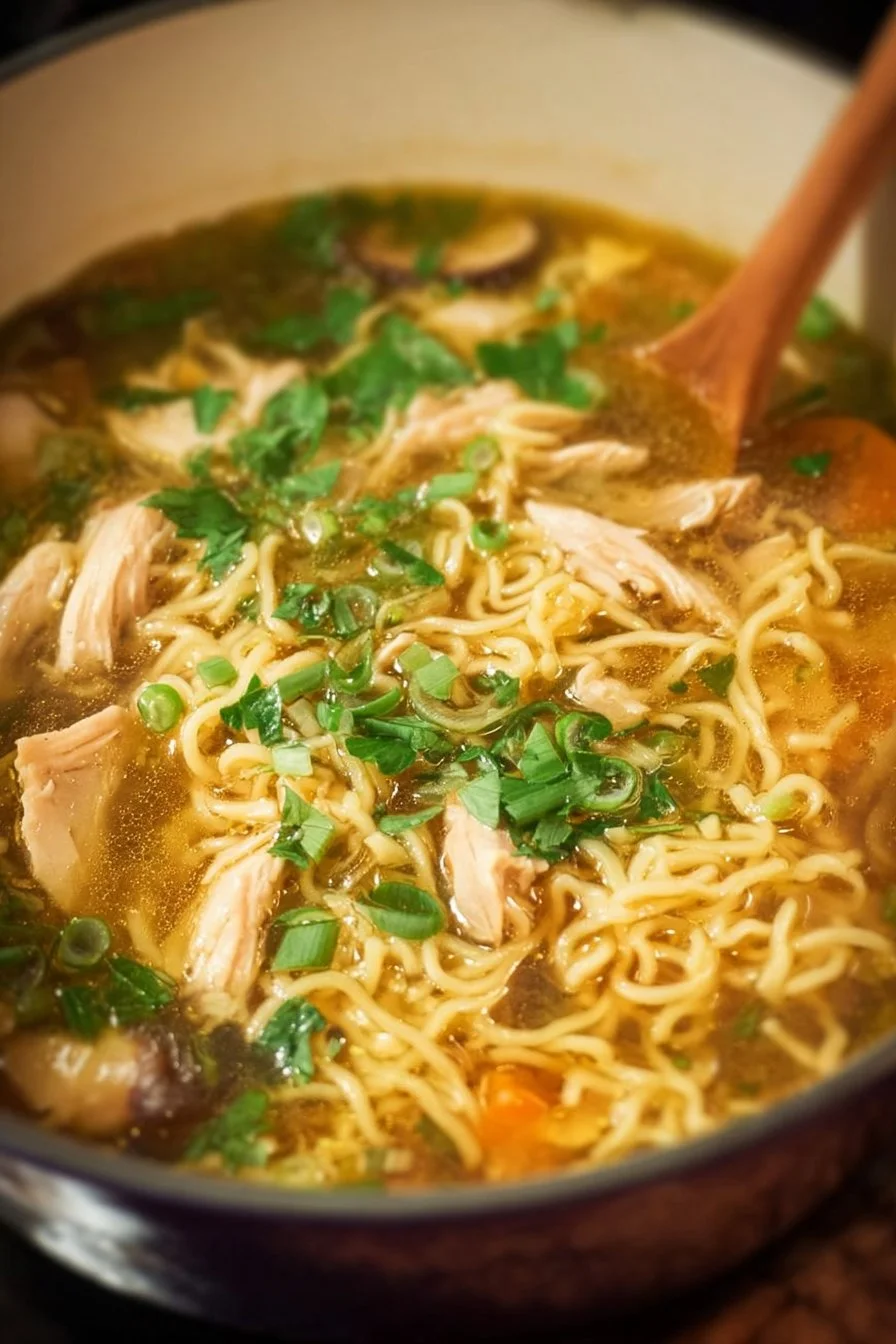
Bright, fragrant, and deeply comforting, this Asian Chicken Noodle Soup is a bowl of cozy brilliance: silky chicken simmered in a savory soy-ginger broth, brightened with garlic and green onions, and finished with crisp-sweet vegetables and tender noodles. It’s simple enough for a weeknight dinner yet special enough for when you want something nourishing and satisfying. The textures are a perfect play—shredded chicken, soft noodles, and a gentle snap from peas and bell pepper—served with lime wedges and fresh herbs to wake up the bowl. If you like a lighter, aromatic noodle soup, you might also enjoy this chicken noodle soup guide that leans into classic simplicity.
Why You’ll Love This Asian Chicken Noodle Soup
- Fast, no-fuss cooking: one pot for the broth and chicken, with noodles cooked separately to keep them from getting gummy.
- Balanced flavors: savory soy, warm ginger, and garlic create a broth that’s both comforting and bright.
- Texture contrast: tender shredded chicken, soft noodles, crisp snap peas, and sliced bell pepper.
- Versatile: works with rice noodles or egg noodles depending on preference or pantry staples.
- Family-friendly: mild enough for kids, with options to add heat or extra aromatics for adults.
- Great for leftovers: flavors deepen after a day, making this a reliable make-ahead meal.
- Easy to customize: top with cilantro or parsley and squeeze of lime for a fresh finish.
- Comfort-food vibe: perfect for cold nights, a light lunch, or when you need something soothing.
What Is Asian Chicken Noodle Soup?
Asian Chicken Noodle Soup is a comforting noodle soup built on a savory chicken broth flavored with soy sauce, ginger, and garlic. The method is straightforward: simmer chicken in a flavored broth, shred it, then return it to the pot with fresh vegetables. Noodles are cooked separately and added right before serving so they stay springy.
Taste profile: savory-salty from soy sauce, aromatic and slightly spicy from fresh ginger and garlic, with a citrusy lift if you finish with lime. Texture-wise it combines shredded protein, silky noodles, and crisp vegetables.
When people serve it: as a warming weeknight dinner, a light lunch, or a soothing meal when someone’s under the weather. The overall vibe is unfussy comfort food with an Asian-inspired twist—minimal fuss, maximum satisfaction.
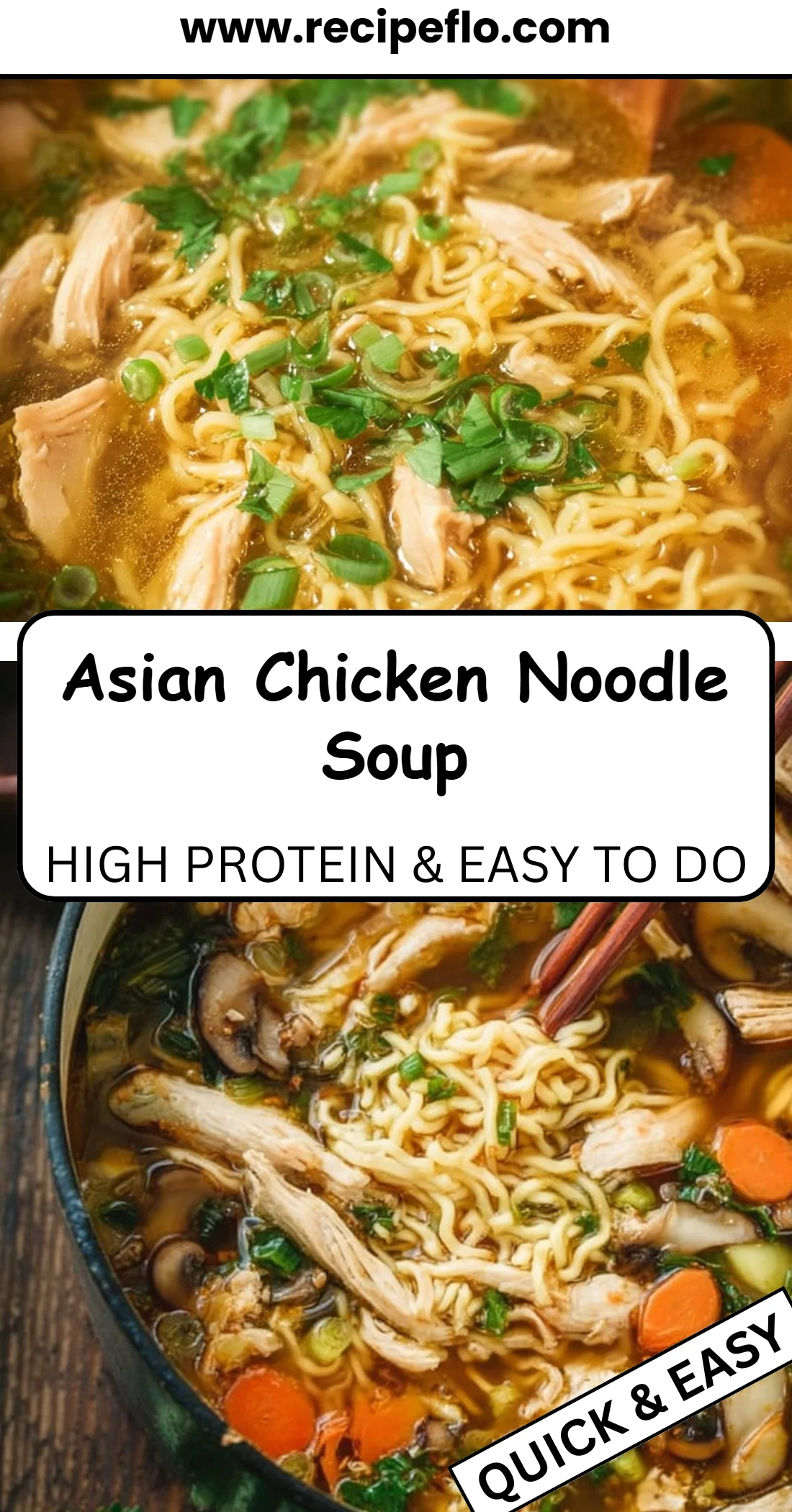
Ingredients for Asian Chicken Noodle Soup
For the Base
- Chicken breast or thighs
- Chicken broth
- Water
- Soy sauce
- Fresh ginger, minced
- Garlic, minced
For the Vegetables & Noodles
- Green onions, sliced
- Carrots, sliced
- Snap peas or snow peas
- Bell pepper, sliced
- Rice noodles or egg noodles
For Serving
- Fresh cilantro or parsley
- Lime wedges
Ingredient Notes (Substitutions, Healthy Swaps)
- Chicken breast or thighs: Both work. Use breasts for leaner meat and thighs for richer flavor and more forgiving cooking.
- Chicken broth: Use low-sodium broth to control saltiness, especially if your soy sauce is salty.
- Water: Keeps the broth from becoming too intense; you can reduce water for a stronger broth.
- Soy sauce: For a gluten-free version, substitute with tamari or coconut aminos.
- Fresh ginger and garlic: Fresh is best for brightness. If you must, use about 1/2 teaspoon ground ginger and 1/2 teaspoon garlic powder per clove, but fresh is recommended.
- Rice noodles vs egg noodles: Rice noodles make this naturally gluten-free (if soy sauce is gluten-free). Egg noodles keep the soup heartier and more familiar for some palates.
- Herbs and citrus: Fresh cilantro or parsley and lime wedges are finishing touches that enhance brightness—use what you prefer.
Step-by-Step Instructions
Step 1 – Prepare the Ingredients
Gather everything and chop all vegetables so they’re ready to go.
Visual cue: You should have sliced carrots, bell pepper, green onions, and minced ginger and garlic on the counter.
Step 2 – Cook the Chicken
In a large pot, combine chicken broth, water, soy sauce, minced ginger, and garlic. Add the chicken breast and bring to a boil. Reduce heat and simmer for 15 to 20 minutes or until cooked through.
Visual cue: The broth should smell fragrant with ginger and garlic, and the chicken will be opaque and cooked through (no pink inside).
Pro cue: Keep the heat at a gentle simmer; a rolling boil will toughen the chicken.
Step 3 – Shred the Chicken
Once cooked, remove the chicken from the pot and shred it using two forks.
Visual cue: Shredded chicken should pull apart easily and be moist.
Pro cue: If you need extra speed, cool the chicken slightly and use a stand mixer with the paddle on low for 30–60 seconds to shred perfectly.
Step 4 – Add Vegetables
Return the shredded chicken to the pot, along with the carrots, snap peas, and bell peppers. Simmer for an additional 5 minutes until the vegetables are tender.
Visual cue: Vegetables should lighten in color and still have a slight crispness—overcooked veg will turn dull.
Pro cue: Slice veggies thin so they cook quickly and evenly in the short simmer time.
Step 5 – Cook the Noodles
Prepare the rice or egg noodles separately according to package directions, then add them to the soup pot just before serving.
Visual cue: Noodles should be al dente—soft but still springy.
Pro cue: Rinse rice noodles in cool water after cooking to stop them from cooking further; for egg noodles, drain and toss with a little oil if not serving immediately.
Pro Tips for Success
- Use simmering, not boiling: A gentle simmer ensures tender chicken and a clear, balanced broth.
- Control the salt: If you use regular soy sauce and full-sodium broth, the soup can get salty—start with less soy and add more to taste after the vegetables are in.
- Noodles last: Cook noodles separately to prevent them from soaking up all the broth and turning mushy.
- Slice uniformly: Matchstick or thin slices on veggies help them cook quickly and look consistent in the bowl.
- Fresh finish: Add herbs and a squeeze of lime at the end for brightness—don’t cook them into the broth.
- Taste as you go: After adding shredded chicken back in, taste and adjust soy sauce or add a splash of water if flavor is too concentrated.
- Don’t overcrowd the pot: If your pot is small, cook chicken in a wider pan or halve the recipe to maintain even cooking.
Flavor Variations (Optional)
- Spicy version (optional): Add a splash of chili oil or a pinch of chili flakes to the broth while simmering for heat.
- Citrus-ginger boost (optional): Add extra minced ginger and finish with additional lime wedges for a brighter bowl.
- Herb-forward (optional): Swap parsley for cilantro or add both for layered herb flavors.
- Crunch upgrade (optional): Top with thinly sliced raw bell pepper or extra green onions for a crunchy finish right before serving.
- Lightened-up (optional): Use only chicken breast and low-sodium broth for a leaner, lighter soup.
- Noodle-free (optional): Skip noodles to serve as a clear chicken and vegetable soup; it becomes lower carb and lighter.
Serving Suggestions
- Garnish with sliced green onions, chopped cilantro or parsley, and lime wedges for brightness.
- Serve with simple sides like steamed buns, a crisp cucumber salad, or scallion pancakes for a fuller meal.
- For a casual weeknight, ladle into deep bowls and provide extra soy sauce and lime on the side for guests to season.
- Pack for lunch: place noodles in a separate container and add to broth when reheating to preserve texture.
- Occasion pairing: gentle enough for a cozy family dinner, yet elevated with fresh herbs for entertaining.
Make-Ahead, Storage & Reheating
- What to prepare ahead: You can simmer the broth and cook the chicken a day ahead, shred it, and refrigerate everything separately. Chop vegetables and slice noodles (if using egg noodles) and store chilled.
- Refrigerator storage time: Store soup (without noodles if possible) in airtight containers for up to 3–4 days. Cooked noodles can be kept separately for 2–3 days.
- Reheating methods:
- Stovetop: Gently reheat broth and chicken over medium-low heat until warmed through, then add cooked noodles just before serving.
- Microwave: Reheat portions in a covered microwave-safe bowl, stirring halfway; add noodles after reheating to avoid overcooking.
- Texture changes: Noodles absorb liquid over time; to prevent a dry soup, keep noodles separate and add right before serving.
Storage and Freezing Instructions
- Freezing: The soup base with shredded chicken freezes well, but freeze without cooked noodles. Pour cooled soup into freezer-safe containers and freeze for up to 3 months.
- Thawing & reheating: Thaw overnight in the refrigerator, then gently reheat on the stovetop. Cook fresh noodles separately and add at serving time.
- If you freeze with noodles: It’s not recommended because noodles will become mushy and alter the soup’s texture. Instead, freeze the broth and chicken for the best results.
- Tip: Label containers with date and contents so you can rotate through frozen meals efficiently.
Nutrition Facts (Per Serving)
| Calories | Protein | Carbs | Fat | Fiber | Sodium |
|———|——–|——|—–|——|——-|
| 320 kcal | 28 g | thirty-five g | 8 g | 4 g | 820 mg |
Nutrition values are estimates and may vary depending on ingredients and portion sizes.
FAQ About Asian Chicken Noodle Soup
Q: My chicken turned out tough. What happened?
A: Likely boiled too vigorously. Use a gentle simmer and avoid high heat to keep chicken tender.Q: Can I use leftover cooked chicken?
A: Yes. Add shredded leftover chicken to the warmed broth and simmer briefly to combine flavors.Q: Why are my noodles gummy?
A: Noodles absorb broth if left to sit. Cook them separately and add just before serving.Q: How can I reduce sodium?
A: Use low-sodium chicken broth and low-sodium or reduced-sodium soy sauce. Taste and add more soy only if needed.Q: Can I make this gluten-free?
A: Yes—use rice noodles and replace soy sauce with tamari or coconut aminos for a gluten-free version.Q: Will this soup keep in the fridge?
A: Yes, store soup (without noodles) for 3–4 days in the refrigerator. Add freshly cooked noodles when reheating for best texture.
Notes
- Plating idea: Serve in shallow bowls and top with bright ribbons of green onion and a lime wedge for a restaurant-style presentation.
- Small flavor upgrade: Stir in a small squeeze of lime into each bowl for a citrus lift that brightens the savory broth.
- Seasoning adjustment: Always taste the broth after adding vegetables and shredded chicken; you may need a touch more soy or a splash of water to balance.
- Leftover tip: If leftovers taste concentrated, add a bit of hot water and a squeeze of lime when reheating to refresh the flavors.
- Herbs: If using cilantro, add it at the end to preserve its fresh flavor; parsley can stand a bit of heat and be stirred in earlier.
- For more inspiration on related recipes and a slightly different ginger-garlic take, try this take on the classic with more aromatics found in classic ginger garlic chicken noodle soup.
Asian Chicken Noodle Soup
- Total Time: 45 minutes
- Yield: 4 servings
- Diet: Gluten-Free
Description
A comforting noodle soup with silky chicken, savory soy-ginger broth, and fresh vegetables, perfect for a cozy meal.
Ingredients
- 1 lb chicken breast or thighs
- 4 cups chicken broth
- 1 cup water
- 1/4 cup soy sauce
- 1 tbsp fresh ginger, minced
- 2 cloves garlic, minced
- 2 green onions, sliced
- 2 carrots, sliced
- 1 cup snap peas or snow peas
- 1 bell pepper, sliced
- 8 oz rice noodles or egg noodles
- Fresh cilantro or parsley, for serving
- Lime wedges, for serving
Instructions
- Prepare the ingredients by chopping all vegetables.
- Cook the chicken by combining broth, water, soy sauce, ginger, and garlic in a pot. Add chicken and simmer for 15-20 minutes.
- Shred the chicken using two forks once cooked.
- Add the shredded chicken, carrots, snap peas, and bell pepper back into the pot. Simmer for an additional 5 minutes.
- Cook the noodles separately according to package directions and add them to the soup just before serving.
Notes
For best texture, cook noodles separately to avoid them becoming gummy. Garnish with fresh herbs and lime for added brightness.
- Prep Time: 15 minutes
- Cook Time: 30 minutes
- Category: Soup
- Method: Simmering
- Cuisine: Asian