
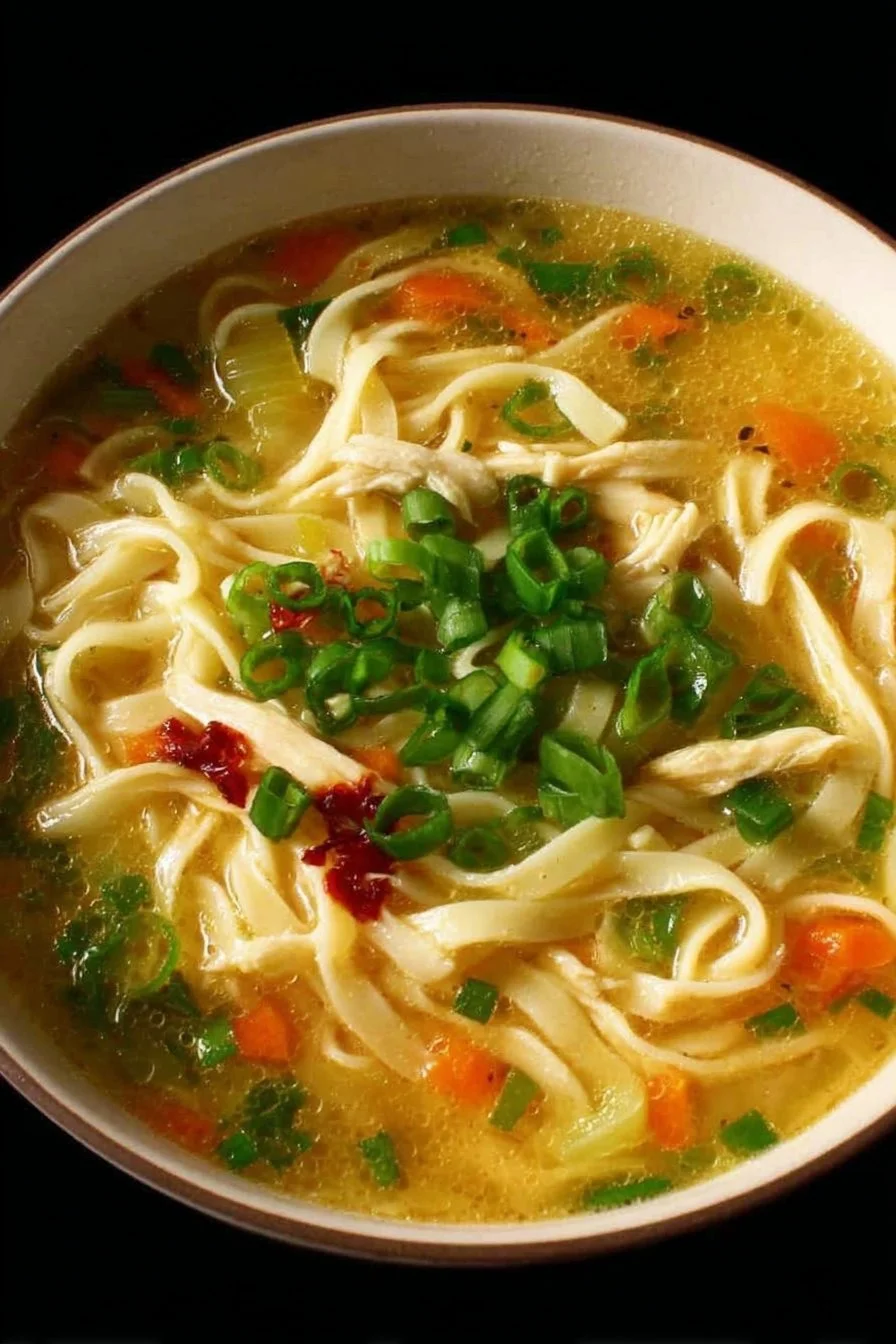
A steaming bowl of Classic Ginger Garlic Chicken Noodle Soup is exactly what you want when you need something soothing, flavorful, and honest. Bright ginger and pungent garlic infuse the broth with a warming, aromatic lift while tender shredded chicken and carrot-and-celery medley give it body and comfort. The egg noodles offer that satisfying slurp and gentle chew, making each spoonful both nourishing and familiar. This recipe is straightforward to make on a weeknight, yet special enough to bring out when friends need a little TLC. Serve it with crusty bread for dunking and a sprinkle of fresh parsley for a clean finish. For the full ingredient and technique breakdown, see the full recipe page.
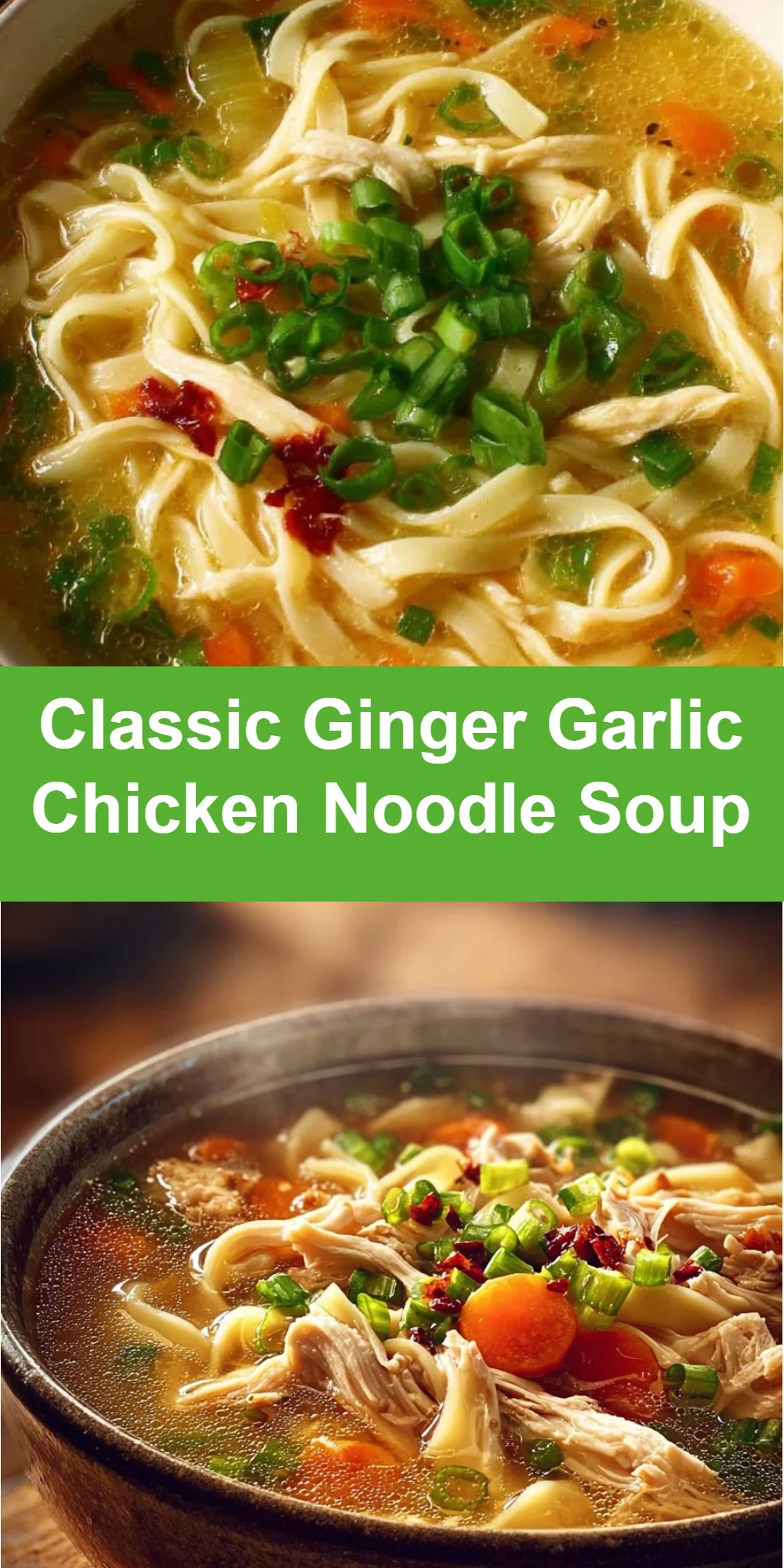
Why You’ll Love This Classic Ginger Garlic Chicken Noodle Soup
- Bold garlic and fresh ginger create a bright, warming flavor profile that’s more interesting than plain chicken soup.
- Tender shredded chicken adds satisfying protein and makes the soup feel like a complete meal.
- Quick and easy: everything comes together in one pot and cooks in under 30 minutes.
- Comforting texture contrast: soft, silky noodles, tender vegetables, and a lightly aromatic broth.
- Versatile and forgiving — easy to scale, adjust, or serve with simple sides like crusty bread.
- Gentle enough for sick days, but flavorful enough for family dinners or casual entertaining.
- Minimal ingredients and straightforward steps make it pantry-friendly for busy cooks.
- Fresh parsley garnish adds a bright herbal finish that lifts the whole bowl.
What Is Classic Ginger Garlic Chicken Noodle Soup?
This is a one-pot chicken noodle soup brightened by fresh ginger and aromatic garlic. The dish features a simmered chicken broth base into which shredded cooked chicken, sliced carrots, and celery are added, finished with egg noodles cooked until al dente. The taste is savory with a subtle ginger warmth and a clean garlic underpinning — comforting without being heavy. It’s made on the stovetop using a gentle simmering method, which keeps the chicken tender and the vegetables slightly crisp-tender. People typically serve this as a soothing family dinner, a recovery meal when under the weather, or a cozy lunch paired with bread. The overall vibe is classic comfort food with a fresh, slightly Asian-inspired twist.
For a broader look at variations on this comforting classic, check out this helpful chicken noodle soup resource.
Ingredients for Classic Ginger Garlic Chicken Noodle Soup
For the Base
- 2 tablespoons olive oil
- 1 onion, chopped
- 3 cloves garlic, minced
- 1 tablespoon fresh ginger, grated
- 4 cups chicken broth
For the Soup
- 2 cups cooked chicken, shredded
- 1 cup carrots, sliced
- 1 cup celery, sliced
- Egg noodles (amount as desired; cook according to package instructions, about 6–8 minutes)
For Seasoning & Serving
- Salt and pepper to taste
- Fresh parsley for garnish
- Optional: crusty bread on the side
Ingredient Notes (Substitutions, Healthy Swaps)
- Chicken: Use leftover roast chicken or store-bought rotisserie chicken to save time. You can also shred poached or baked chicken breasts or thighs.
- Broth: If you want a lower-sodium option, use low-sodium chicken broth and adjust salt at the end. Vegetable broth can work in a pinch, but the flavor will be lighter.
- Olive oil: Swap for avocado oil or a neutral oil if you prefer. For a richer finish, a small pat of butter added at the end is optional (note this is an optional change).
- Noodles: For gluten-free, use gluten-free egg-style noodles or rice noodles (adjust cooking time). For a lower-carb meal, spiralized zucchini can replace noodles — add at the end and cook briefly.
- Ginger and garlic: Fresh is best for brightness. If you only have ground ginger, use a small pinch (not a direct 1:1 swap); frozen grated ginger also works.
- Herbs: Parsley is suggested, but cilantro or chives can be used as an optional garnish without changing the core identity.
Step-by-Step Instructions
Step 1 – Sauté the aromatics
Heat the olive oil in a large pot over medium heat. Add the chopped onion, minced garlic, and grated ginger, and sauté until the onion becomes translucent, about 5 minutes.
Visual cue: The onion should look glossy and translucent, and you should smell the garlic and ginger becoming fragrant without browning.
Step 2 – Add the broth and simmer
Pour in the chicken broth and bring to a gentle simmer. Lower the heat so the liquid barely bubbles.
Pro cue: A gentle simmer keeps flavors melding without reducing the broth too quickly — aim for small, steady bubbles.
Step 3 – Add chicken and vegetables
Add the shredded chicken, sliced carrots, and celery. Cook for about 10 minutes until the vegetables soften.
Visual cue: Carrots should be fork-tender but still hold their shape, and the chicken will warm through and blend with the broth.
Step 4 – Cook the noodles
Stir in the egg noodles and cook according to package instructions until al dente, about 6–8 minutes.
Pro cue: Stir once or twice after adding noodles to prevent sticking; taste a noodle a minute or two before the minimum time to get perfect chew.
Step 5 – Season to taste
Taste the soup and season with salt and pepper to your liking. Remember that broth brands vary in saltiness; adjust carefully.
Visual cue: The final broth should taste balanced — savory with a light ginger warmth and a gentle garlic backdrop.
Step 6 – Serve and garnish
Ladle the soup into bowls, garnish with fresh parsley, and serve hot with optional crusty bread on the side.
Pro cue: Add parsley just before serving to keep it bright and colorful.
Pro Tips for Success
- Use pre-cooked chicken to keep the recipe quick; cold shredded chicken can be added directly to the simmering broth to heat through.
- Keep the heat moderate when sautéing the aromatics; browning the garlic will turn it bitter.
- Cut vegetables uniformly so they cook evenly during the 10-minute simmer.
- If you plan to store leftovers with noodles, undercook the noodles slightly (by 1–2 minutes) so they don’t turn mushy after reheating.
- Taste before adding salt — many store-bought broths already contain sodium.
- For maximum flavor, let the soup sit off heat for 5–10 minutes before serving; it allows flavors to meld.
- Avoid over-boiling once the noodles are in; vigorous boiling can make them fall apart.
Flavor Variations
All variations below are optional and keep the base recipe intact.
- Spicy kick: Add a pinch of crushed red pepper flakes or a drizzle of chili oil when sautéing the garlic for a warm heat.
- Citrus brightening: A squeeze of lemon or lime just before serving adds a fresh, bright finish.
- Herb-forward: Stir in a handful of chopped fresh cilantro or dill at the end for a different herbal note.
- Ginger-forward: Increase the grated ginger by 1/2 tablespoon for a more pronounced warming profile.
- Noodle swap: Replace egg noodles with rice noodles (cook time will vary) for a slightly lighter texture.
Serving Suggestions
- Serve with slices of crusty bread or a warm baguette for dunking.
- Add a simple green salad dressed with a light vinaigrette to contrast the warm soup.
- Offer lemon wedges on the side for guests who enjoy a citrus lift.
- Pair with roasted vegetables or a grilled cheese sandwich for a more substantial meal.
- Bring the soup to a potluck in a slow cooker to keep it warm and ready to serve.
- For a cozy solo meal, ladle into a wide soup bowl and sprinkle extra parsley for presentation.
Make-Ahead, Storage & Reheating
- Make-ahead: You can prepare the entire soup up to the point of cooking the noodles. Store the soup base (without noodles) in an airtight container in the refrigerator for up to 2 days. Add noodles and heat through when ready to serve.
- Refrigerator storage: Once fully assembled, store in the fridge for 3–4 days. Noodles will absorb liquid over time and soften.
- Reheating methods: Reheat gently on the stovetop over low-medium heat, adding a splash of broth or water if the soup has thickened. Microwave in short intervals, stirring between, to heat evenly.
- Texture changes: Noodles tend to soften as they sit. To preserve texture, cook noodles separately and add them to individual bowls when serving.
Storage and Freezing Instructions
- This soup can be frozen, but there are caveats. Freeze the soup without the egg noodles for best results — cooked noodles can become mushy after thawing. Freeze the broth with chicken and vegetables in airtight containers for up to 3 months.
- To reheat, thaw overnight in the fridge, bring to a simmer on the stovetop, then cook fresh noodles separately and add to bowls before ladling hot soup over them.
- If you freeze the entire assembled soup, expect some texture loss in the noodles and a slight change in vegetable firmness — still tasty, but not quite the fresh-made texture.
Nutrition Facts (Per Serving)
| Calories | Protein | Carbs | Fat | Fiber | Sodium |
|———|——–|——|—–|——|——-|
| 320 kcal | 28 g | 22 g | 14 g | 3 g | 750 mg |
Nutrition values are estimates and may vary depending on ingredients and portion sizes.
FAQ About Classic Ginger Garlic Chicken Noodle Soup
Q: My noodles turn mushy after refrigerating. How can I prevent that?
A: Cook noodles separately and add them to bowls just before serving, or slightly undercook them by 1–2 minutes before storing.Q: Can I use raw chicken instead of pre-cooked?
A: The recipe uses cooked chicken. If you use raw chicken, you’ll need to simmer longer to ensure it’s fully cooked and shred it once tender — timing will change.Q: The soup tastes flat — how can I boost the flavor?
A: Add salt in small increments, finish with a squeeze of lemon, or stir in an extra tablespoon of grated ginger for depth.Q: How do I know when the carrots are done?
A: They should be fork-tender but not falling apart after the 10-minute simmer. Adjust time based on how thickly they’re sliced.Q: Can I use a different noodle shape?
A: Yes — use any egg-style noodle or small pasta. Adjust cooking time according to the package.Q: What’s the best way to reheat leftovers without drying out the chicken?
A: Reheat gently on the stovetop over low heat and add a splash of broth or water if needed to maintain a silky consistency.
Notes
- Serve in wide, shallow bowls to showcase the noodles and make garnishing easy.
- A final drizzle of extra-virgin olive oil or a small pat of butter can add richness if desired.
- Add fresh parsley right before serving to retain its color and freshness.
- If you prefer a clearer broth, skim any surface foam when you first bring the broth to a simmer.
- Adjust the amount of grated ginger to suit your palate — it’s the signature flavor, so small changes make a big difference.
Classic Ginger Garlic Chicken Noodle Soup
- Total Time: 45 minutes
- Yield: 4 servings
- Diet: Gluten-Free
Description
A soothing and flavorful chicken noodle soup infused with ginger and garlic, perfect for weeknight dinners or comforting recovery meals.
Ingredients
- 2 tablespoons olive oil
- 1 onion, chopped
- 3 cloves garlic, minced
- 1 tablespoon fresh ginger, grated
- 4 cups chicken broth
- 2 cups cooked chicken, shredded
- 1 cup carrots, sliced
- 1 cup celery, sliced
- Egg noodles (amount as desired; cook according to package instructions, about 6–8 minutes)
- Salt and pepper to taste
- Fresh parsley for garnish
- Optional: crusty bread on the side
Instructions
- Heat the olive oil in a large pot over medium heat.
- Add the chopped onion, minced garlic, and grated ginger, and sauté until the onion becomes translucent, about 5 minutes.
- Pour in the chicken broth and bring to a gentle simmer.
- Lower the heat so the liquid barely bubbles.
- Add the shredded chicken, sliced carrots, and celery.
- Cook for about 10 minutes until the vegetables soften.
- Stir in the egg noodles and cook according to package instructions until al dente, about 6–8 minutes.
- Taste the soup and season with salt and pepper to your liking.
- Ladle the soup into bowls, garnish with fresh parsley, and serve hot with optional crusty bread on the side.
Notes
For maximum flavor, let the soup sit off heat for 5–10 minutes before serving. Adjust the amount of grated ginger to suit your palate.
- Prep Time: 15 minutes
- Cook Time: 30 minutes
- Category: Main Course
- Method: Stovetop
- Cuisine: Asian